The Right Whales Off Amelia Island Have Names, and the Next Season Starts in Weeks
October 22, 2026
October 22, 2026
On January 16, 2026, an aerial survey team from Clearwater Marine Aquarium Research Institute flew over the Atlantic and photographed right whale #1243, known as Magic, swimming with a newborn about 10 miles east of Amelia Island. She was 44 years old, and the calf was her eighth known calf.
Magic was one of five mothers photographed with calves within 18 miles of the island's north end during last winter's calving season. That season produced more calves than any since 2009. NOAA's season count draws partly on reports from people on shore. The next season opens in mid-November, and the Right Whale Festival at Main Beach Park on November 7 and 8 is the best chance this year to learn how to spot one before the whales arrive.
NOAA Fisheries keeps a mother-by-mother record of the 2026 calving season. Of all the waters on the right whale calving grounds, the stretch off the St. Marys River entrance and Amelia Island shows up again and again.
| Date | Mother | Where she was photographed with her calf |
|---|---|---|
| Dec. 3, 2025 | Millipede, #3520 | About 5 miles east of the St. Marys River entrance |
| Dec. 23, 2025 | Bermuda, #3780 | About 12 miles east of the St. Marys River entrance |
| Jan. 1, 2026 | Boomerang, #2503 | About 9 miles east of the St. Marys River entrance |
| Jan. 5, 2026 | Skittle, #3260 | About 18 miles east of the St. Marys River entrance |
| Jan. 16, 2026 | Magic, #1243 | About 10 miles east of Amelia Island |
Each of these whales has a history. Boomerang was 31 when she had this calf, her fifth, and she's named for a boomerang-shaped white scar on the underside of her fluke. Bermuda gets her name from three patches of callosity on her head that form a triangle, and one of them sometimes disappears. Skittle is at least 24, and her callosity pattern looks like the bowling pin used in the old British game of skittles. She was seen tangled in line and a buoy in 2007 and shed the gear on her own.
Millipede's December 3 sighting, about 5 miles out, was the closest of the five to the St. Marys entrance. Most of these whales were farther out than anyone can see from the sand. NOAA has also photographed mothers much closer to shore elsewhere in Northeast Florida. On March 14, 2026, a 10-year-old first-time mother named Mirror was photographed with her calf just past the surf at Crescent Beach.
NOAA reported 23 calves in the 2026 calving season, the most since 2009. The New England Aquarium reported eleven calves in 2025, the year before.
Of the 23 mothers, 20 had calved before, and 13 of those last gave birth in 2021 or 2022. NOAA notes that this is a shorter gap than the recent average of 7 to 10 years and closer to the healthy interval of 3 to 4 years. Millipede is one of those quick returners. She and her sister Bocce both calved in 2021 and both calved again this past season.
The total population is still small. The most recent estimate from the North Atlantic Right Whale Consortium, released October 21, 2025, puts the 2024 population at 384 whales, with an uncertainty range of 10 above and 9 below. NOAA's species page describes that count as whales alive at the start of 2024 and rounds it to about 380. The consortium updates its estimate each year around its annual meeting, which is scheduled for November 16–17, 2026. That means a new figure will likely come out just as the first whales of this season reach Northeast Florida.
During the 2026 season there were about 500 sightings of 129 right whales in the Southeast. NOAA lists the sources as aerial and vessel surveys, members of the public, the volunteer sighting network, military vessels and dredging operations. NOAA says public reports add to the survey data used to update population and calving numbers.
Here on the island, that volunteer work runs through Amelia Island Whale Ambassadors. The group trains people to identify right whales from the beach, and trained volunteers can get alerts from the Right Whale Sighting Network. NOAA's sightings map comes with a caution: if no whales show on the map, that doesn't mean none are out there, because sighting coverage is limited. Volunteers who know what they're looking at help fill those gaps.
That's what makes the festival weekend useful for anyone who lives here. It's when the training and the people who run it are in town, about a week before the season begins.
This is the 18th annual Right Whale Festival, and the 2026 theme is "Their Future, Our Fight," as Amelia Island Signal reported. Clearwater Marine Aquarium Research Institute and NOAA Fisheries co-host it. Times below come from the festival schedule and activities page.
Friday, Nov. 6
Saturday, Nov. 7
Sunday, Nov. 8
Monday, Nov. 9
The festival grounds also have Bones and Baleen, meet-and-greets with experts, a kids' program, life-size whale inflatables, food trucks and more than 100 exhibitors. If you can only make one thing, the Monday training is the one that keeps paying off all winter.
NOAA's Southeast reporting line is 877-WHALE-HELP, or (877) 942-5343. You can also report on Coast Guard VHF channel 16 or through the Whale Alert app. The Marineland Right Whale Project runs a separate hotline for active sightings at 888-979-4253, in partnership with Blue World Research Institute.
A few federal rules apply once whales are in local waters. Under NOAA's approach rule, no one may approach or stay within 500 yards of a North Atlantic right whale. That covers vessels, aircraft including drones, and other watercraft, and any vessel inside that distance has to leave right away. NOAA's vessel speed rule limits most vessels 65 feet or longer to 10 knots or less in Seasonal Management Areas. One area runs from Wilmington, North Carolina, to Brunswick, Georgia, from November 1 to April 30. The calving and nursery area farther south is covered from November 15 to April 15. In March 2026, NOAA published an advance notice asking for input on possible changes to that rule. It isn't a final rule, and the current restrictions are still in effect. This is general information, not legal advice. Boat owners and drone pilots should check NOAA's current requirements for their own vessel or aircraft.
NOAA puts the start of the season in mid-November. Last winter, Millipede and her calf were photographed off the St. Marys entrance on December 3.
If you have questions about life on this side of Amelia Island, through whale season or any other time of year, Chad Feuerhahn is glad to talk it through. Let's Connect.
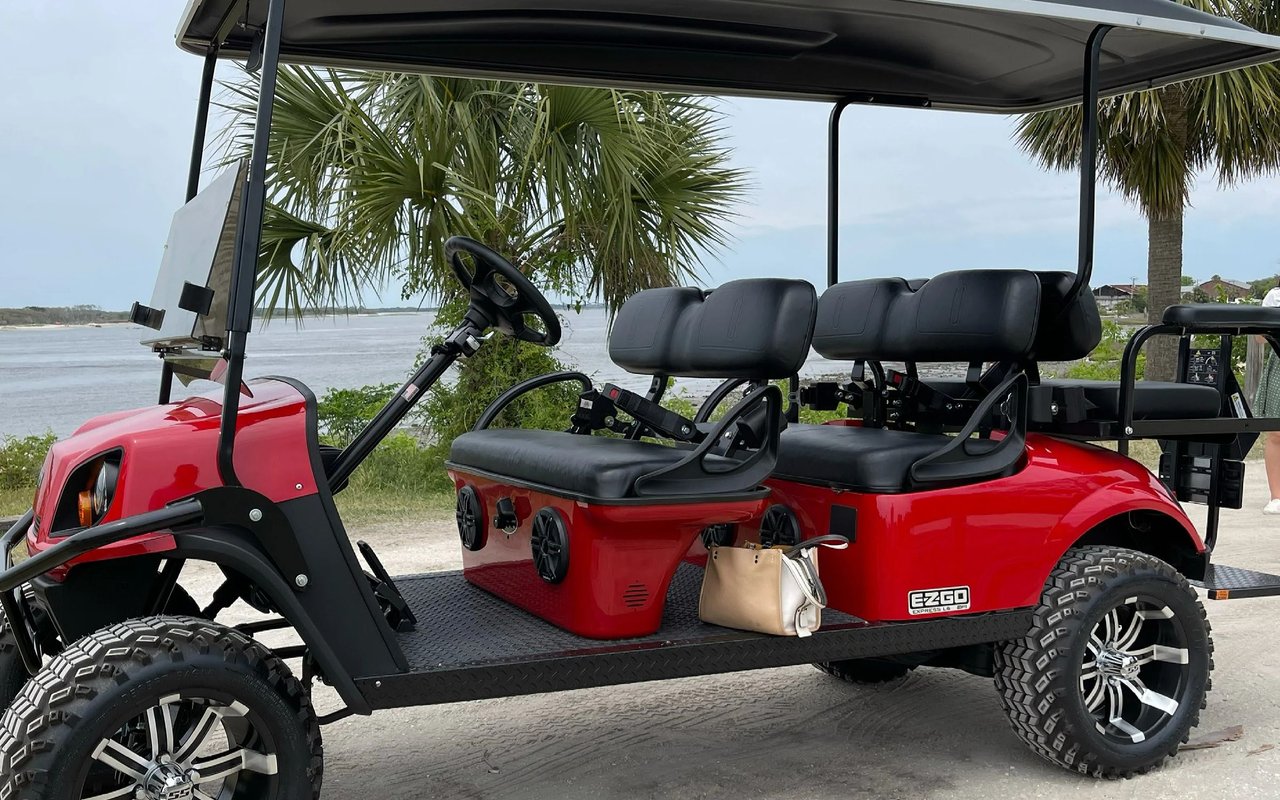
Understand the legal distinctions between golf carts and Low-Speed Vehicles (LSVs).
Combining deep local expertise, proven results, and professional home inspection knowledge to help buyers and sellers make confident, informed decisions throughout their real estate journey.
CHAD FEUERHAHN
316 Ash St.
FERNANDINA BEACH, FL 32034